


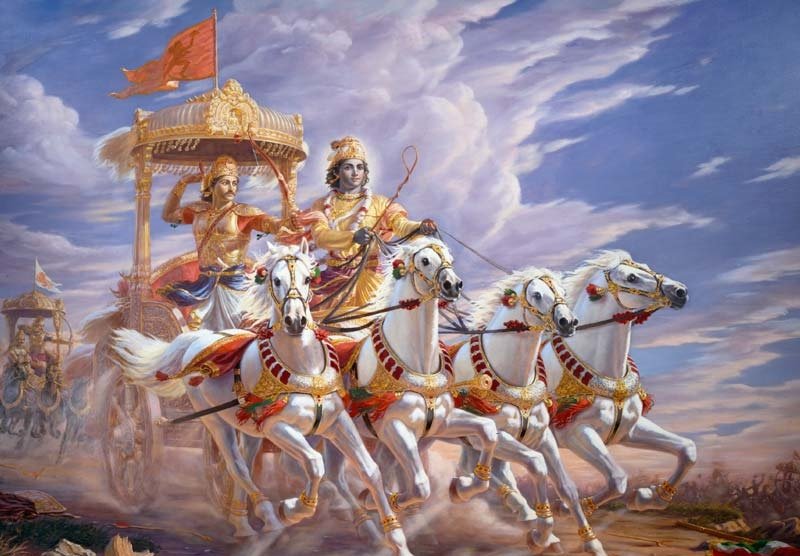
The Mahabharata stands as one of humanity’s greatest literary and spiritual works — a narrative that fuses politics, ethics, and philosophy into a vast cosmic canvas. Yet, beneath its poetic grandeur lies a persistent question: Was the Mahabharata based on real historical events?
For generations, scholars, archaeologists, and believers have sought tangible proof — cities, artifacts, or landscapes that could bridge the gap between epic and evidence. Modern archaeology, marine exploration, and scientific dating have brought us closer to understanding whether this grand epic reflects history, mythology, or a unique synthesis of both.
Ancient Cities and Archaeological Clues
Hastinapura — The Epic Capital
The city of Hastinapura, mentioned as the capital of the Kuru dynasty, has long intrigued archaeologists. Excavations near modern Meerut have revealed multi-layered settlements with pottery, iron tools, and household items that align with the Iron Age.
Among these findings, a distinctive pottery type known as Painted Grey Ware (PGW) has become a cultural marker. PGW culture, dated roughly between 1200–600 BCE, is found throughout the upper Gangetic plains — the very geography where the Mahabharata unfolds.
Although this does not confirm the events of the epic, it suggests that a powerful kingdom indeed flourished in this region during that timeframe, forming the socio-political background that may have inspired the Mahabharata.
Kurukshetra — The Battlefield of Ideas
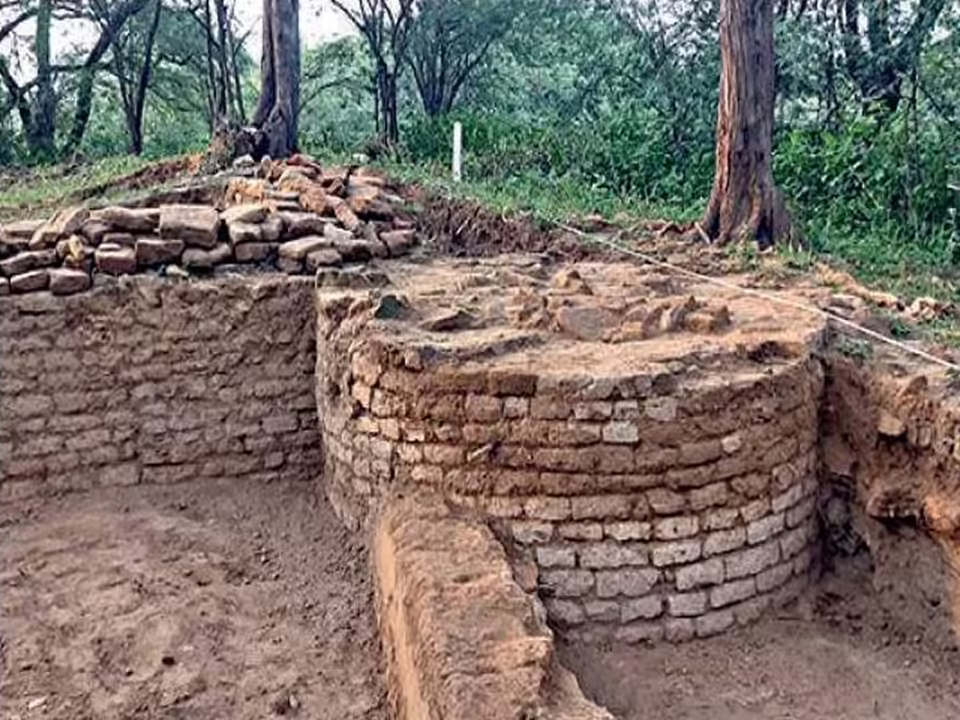
Kurukshetra, traditionally identified as the battlefield where the war took place, continues to be both a pilgrimage and a site of research. Excavations in nearby areas have revealed ancient fortifications, mud ramparts, and iron-age settlements.
Rather than proving a single catastrophic war, these layers reveal a continuum of habitation — a reminder that the “great war” might have been a symbolic synthesis of multiple conflicts across generations. The archaeological evidence thus complements the epic’s role as both historical memory and moral allegory.
Dwarka — The Sunken City Beneath the Sea
If Hastinapura is the symbol of political struggle, Dwarka represents divine mystery. Described in the Mahabharata and the Puranas as the glorious city built by Lord Krishna, Dwarka’s reported submergence after Krishna’s departure has intrigued scientists and devotees alike.
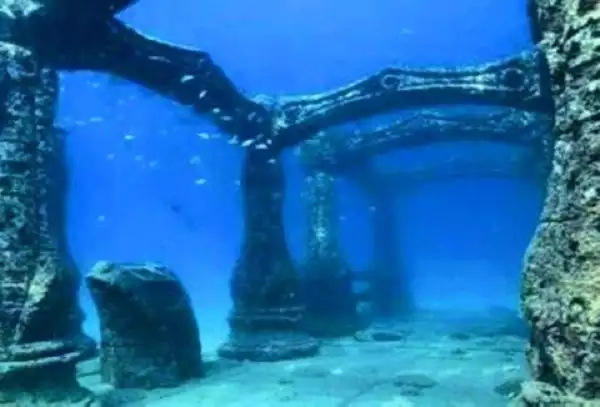
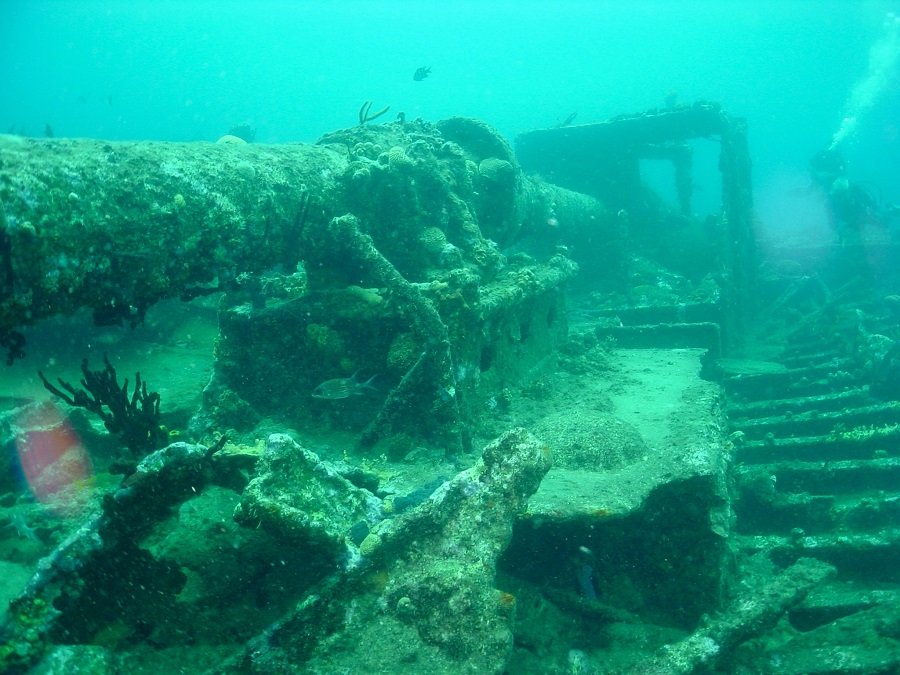
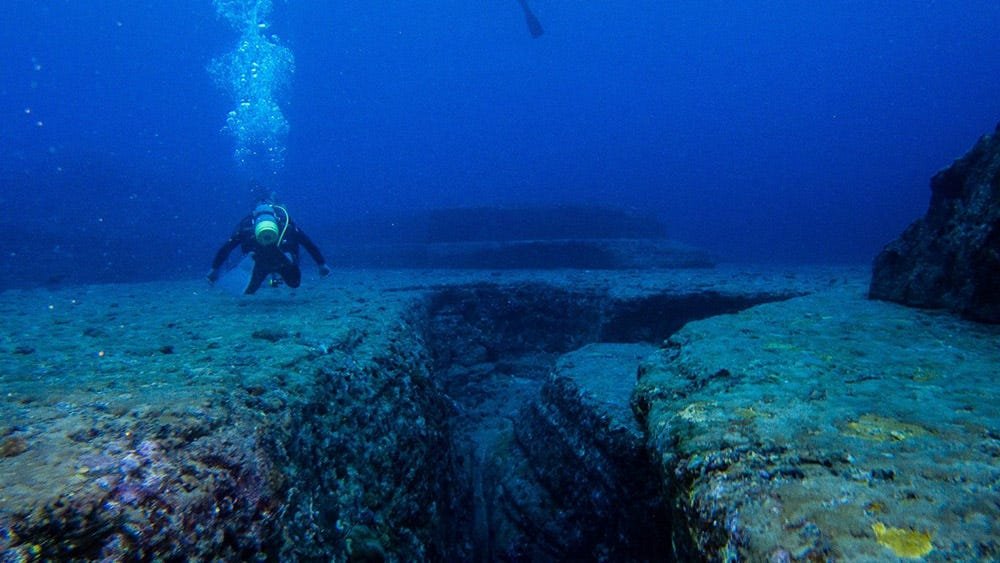
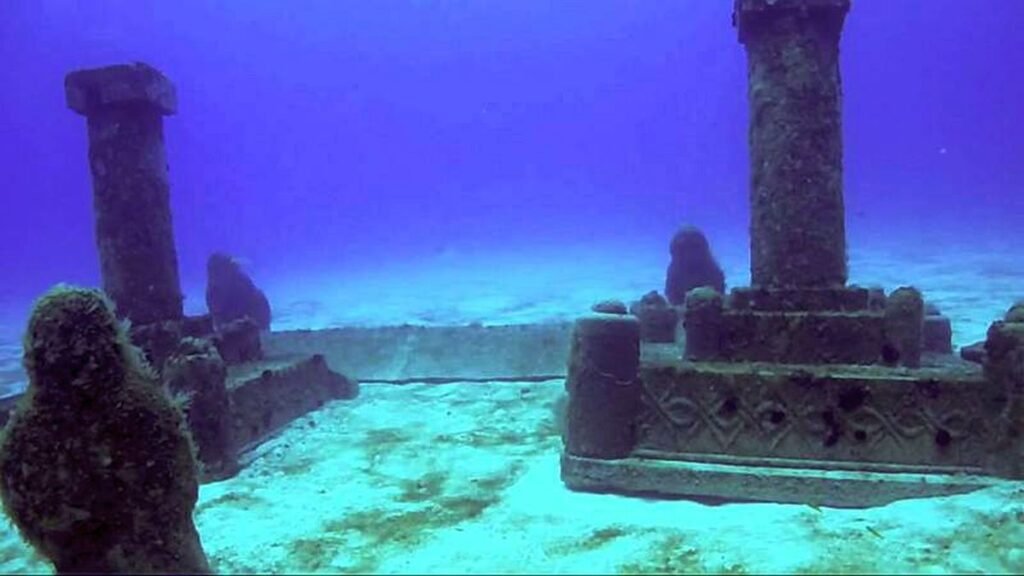
Marine archaeological explorations off the coast of Gujarat have uncovered submerged stone structures, ancient anchors, and remnants of jetty-like formations under shallow waters. These findings suggest the existence of an ancient port city, thriving in maritime trade long before the classical period.
While scholars remain cautious about directly identifying these remains as Krishna’s Dwarka, their age — roughly estimated between 1500 and 1200 BCE in some layers — coincides with the general cultural horizon associated with the Mahabharata period.
Recent underwater surveys by the Archaeological Survey of India (ASI) and the National Institute of Oceanography have intensified research efforts. Using sonar imaging and underwater robotics, archaeologists are mapping submerged walls, harbor structures, and possible street alignments. The findings point toward the existence of an urban settlement that was eventually swallowed by the sea — echoing the ancient legend of Dwarka’s submergence.
Scientific Perspectives and Chronological Challenges
Despite impressive discoveries, dating the Mahabharata precisely remains one of history’s most complex puzzles.
The epic itself is a composite text — shaped by centuries of oral tradition before being codified into written form. Its core narrative may have originated in the late Bronze or early Iron Age, but later redactions added philosophical dialogues, mythic elaborations, and regional layers.
Radiocarbon dating and geological studies can determine the age of materials or submerged structures, but connecting them directly to the Mahabharata’s specific events is difficult. India’s long and continuous civilization means that sites often show overlapping cultural phases, making direct associations uncertain.
Yet, the convergence of clues — from the PGW sites in North India to the marine ruins of Dwarka — suggests that the Mahabharata is not a mere myth. It carries a memory of real places, real dynasties, and real social transformations.
Interpretations — Between Myth and History
Modern researchers approach the Mahabharata through three interpretive lenses:
- Historical Core Theory:
This view holds that the epic preserves memories of genuine conflicts among ancient Indo-Aryan tribes. Over centuries, storytellers transformed these clan wars into an allegorical narrative about dharma, destiny, and the cosmic struggle between good and evil. - Mythical Symbolism Theory:
Others argue that the Mahabharata was never meant as a chronicle but as a spiritual allegory — a reflection on human morality, leadership, and the eternal conflict within the self. - Synthesis or Cultural Memory Theory:
The most balanced interpretation recognizes that the Mahabharata is both — a historical memory deeply mythologized over time. Like the Trojan War in Homer’s Iliad, it may blend historical kernels with poetic embellishment.
The Role of Science in Future Research
New technology is offering exciting tools to reassess India’s ancient past:
- Underwater LIDAR and Sonar Mapping for reconstructing submerged landscapes like Dwarka’s seabed.
- Optically Stimulated Luminescence (OSL) and advanced radiocarbon calibration to refine dating accuracy.
- Geoarchaeological and Sediment Studies to analyze sea-level changes and tectonic shifts responsible for ancient submersions.
- AI-based Textual Analysis of Sanskrit manuscripts to separate older narrative layers from later interpolations.
As interdisciplinary research grows, the line between legend and history may become clearer — not by reducing faith to data, but by enriching both.
Conclusion
The Mahabharata is not simply a story; it is a living chronicle of civilization. Archaeological discoveries at Hastinapura, the Painted Grey Ware culture, and the submerged structures off Dwarka’s coast together paint a portrait of an age of transition — from tribal societies to organized kingdoms, from oral lore to written scripture.
Whether one sees it as a divine revelation or a historical epic, the Mahabharata’s endurance lies in its capacity to hold both truth and symbolism in a single vision.
It is neither pure myth nor perfect history — it is India remembering itself.

