The Twilight of the Spirits
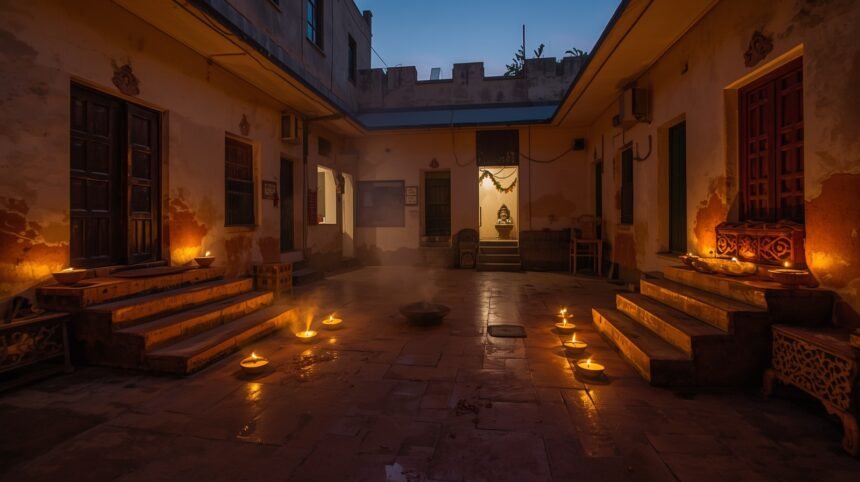
On the eve of Kali Puja, as the autumn dusk descends over Bengal, homes glow with fourteen flickering lamps and the air fills with the earthy scent of mustard oil and neem. This is Bhoot Chaturdashi, a hauntingly serene night when Bengalis believe the souls of their ancestors return to visit the mortal realm.
While most of India observes Naraka Chaturdashi or Chhoti Diwali, Bengal embraces a different mood—one steeped in mysticism, ancestral devotion, and the tantric rhythm of light and shadow.
As described in the Garuda Purana (Preta Kalpa):
“Yamālokāt pitaraḥ sarve pratyāgacchanti bhūtale; teṣām āgamanārthaṃ dīpānāṃ pradīpanaṃ śubham.”
On this night the ancestors return from the realm of Yama; to light lamps in their honor brings them peace and blessings.
Scriptural Roots and Evolution
Though the term Bhoot Chaturdashi itself does not occur in early Vedic texts, the underlying ritual of lamp lighting and ancestor worship on the dark fortnight has deep roots in Hindu scripture.
The Garuda Purana and Matsya Purana both associate the Chaturdashi tithi (the 14th lunar day) with rituals that ward off evil and honor the departed. In medieval Bengal, Raghunandan Bhattacharya’s “Krityatattva” codified the practice of consuming Choddo Shaak (fourteen greens) and lighting Choddo Prodip (fourteen lamps) as essential observances before Kali Puja.
Thus, over centuries, what began as a pan-Indian scriptural observance evolved into a distinctly Bengali festival, where ancestral remembrance merged with local agrarian customs and tantric philosophy.
The Folklore: Why Spirits Walk Tonight
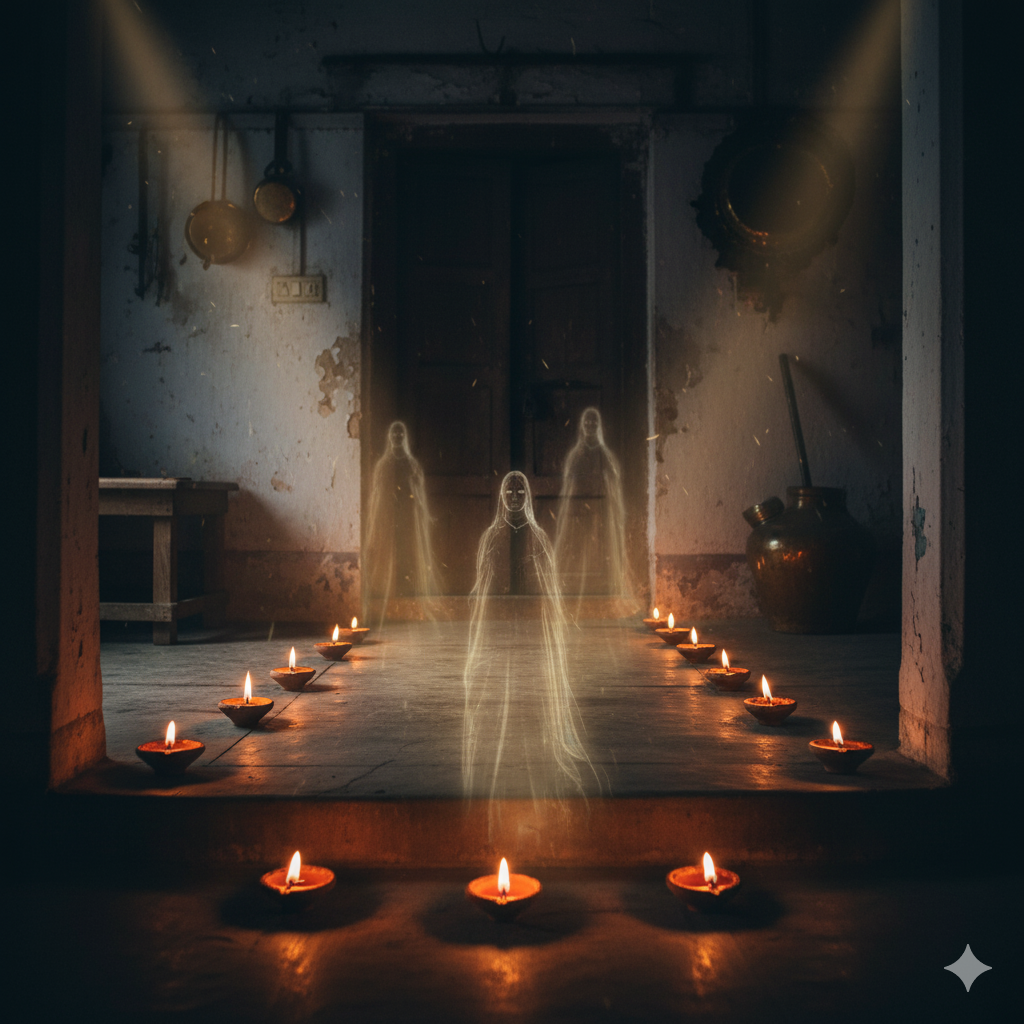
Bengali folklore holds that on this night, fourteen ancestral souls return to their homes, guided by the warm glow of lamps. The family’s duty is to honor them—offering food, light, and remembrance so they may find peace and protection in the afterlife.
In another folk version, Goddess Kali’s fourteen attendants—the Chaturdasha Bhuta—descend with her to cleanse the world before her grand night of worship. The lamps are lit not only to guide the ancestors but also to welcome Kali’s protectors and ward off restless spirits.
The Skanda Purana (Kartik Mahatmya) supports this belief:
“Kartikāmasya krishne dine, chaturdashi niśāsu ca; dīpa-jyotir-ananta-phalam.”
On the dark fourteenth night of Kartik, lighting lamps yields endless merit and divine protection.
The Fourteen Lamps (Choddo Prodip)
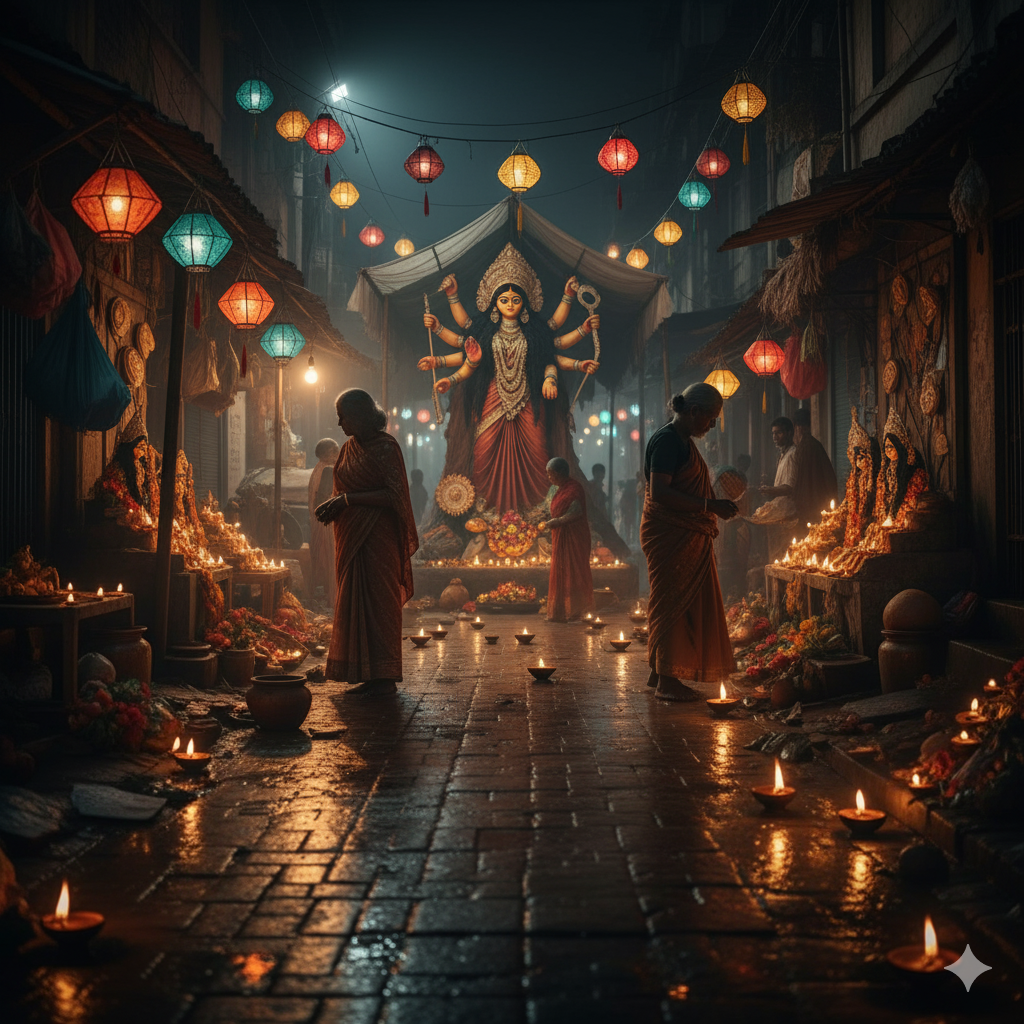
As twilight descends, Bengali households glow with fourteen diyas placed in every corner—doorways, staircases, courtyards, and kitchens. Each flame represents one generation of forefathers, symbolically illuminating their way home.
The lamps serve both spiritual and practical purposes:
- They honor ancestors and repel negative energies.
- They purify the household before the night of Kali Puja.
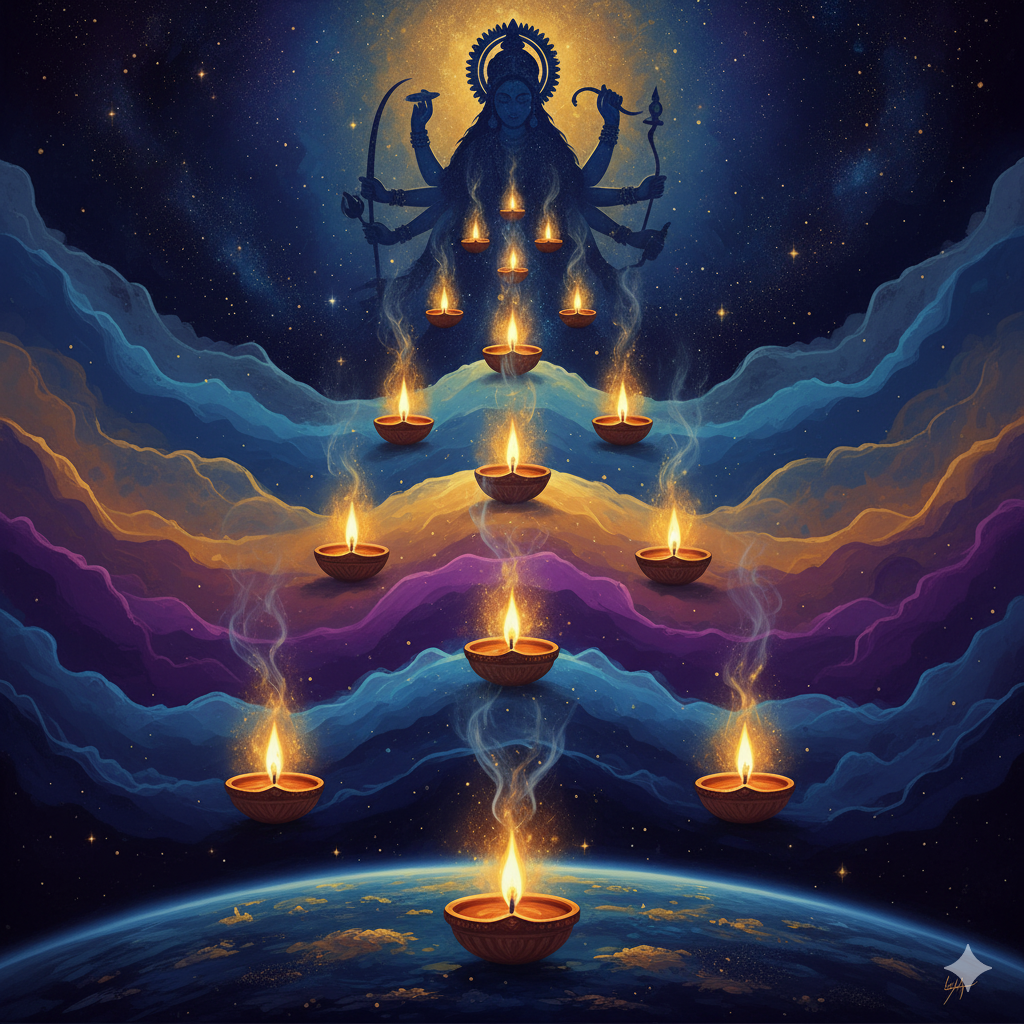
- They correspond to the fourteen realms (lokas) of existence in Hindu cosmology, illuminating the seen and unseen worlds.
As the Kali Purana declares:
“Deepo bhāsayate lokam tamasā pāraṃ nayati.”
The lamp illuminates the world and carries one beyond darkness.

The Sacred Feast of Fourteen Greens (Choddo Shaak)
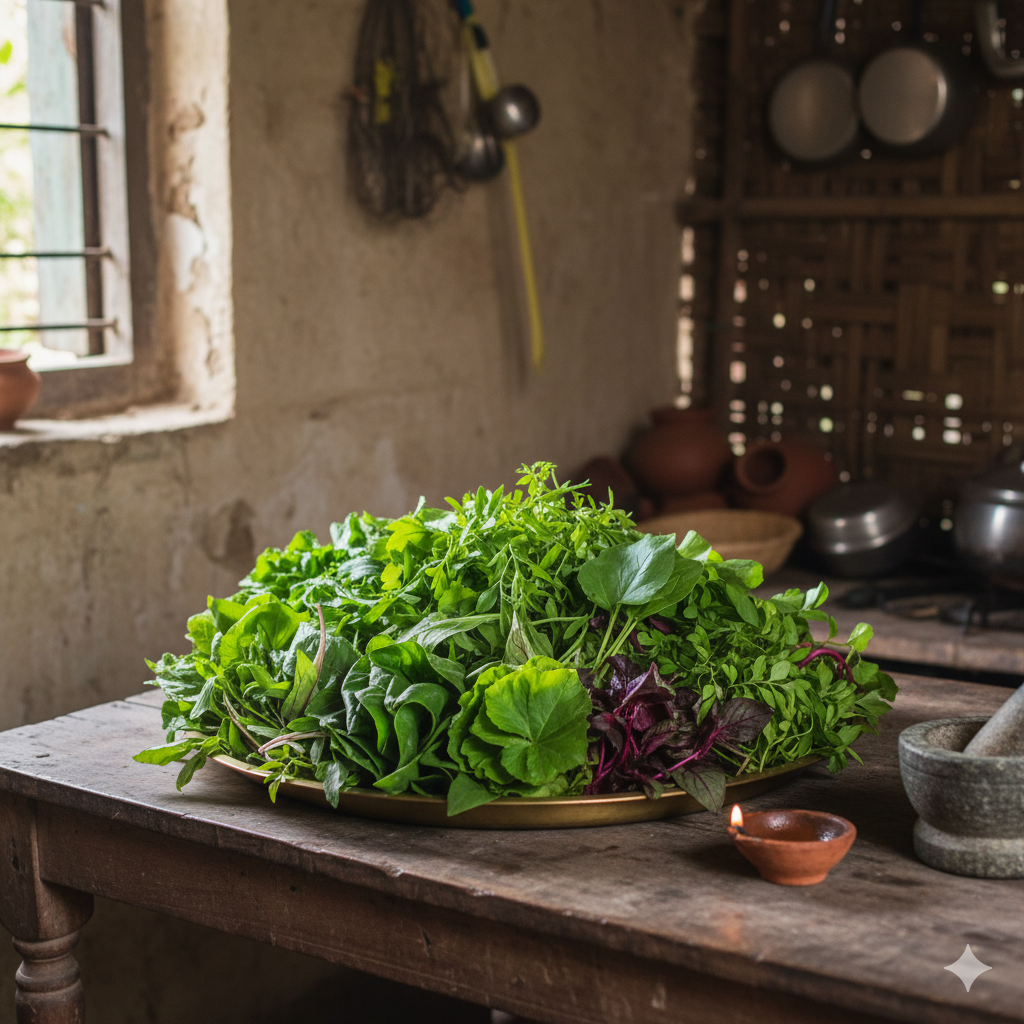
Food plays a symbolic role in every Bengali ritual, and on this night, it takes the form of Choddo Shaak—a dish made from fourteen varieties of leafy greens. Families prepare and eat it before sunset as a sacred act of protection and health.
Common greens include spinach, mustard, radish leaves, pumpkin leaves, bathua, methi, and amaranth. The ritual has multiple layers of meaning:
- Health: The combination boosts immunity before the winter season.
- Purification: It symbolizes cleansing of the body and spirit.
- Remembrance: The first portion is offered to the ancestors before the family eats.
Ayurvedic tradition recommends consuming diverse greens during the month of Kartik to balance vata and kapha doshas. In this way, the folk ritual aligns perfectly with ancient medical wisdom.
Step-by-Step Rituals of Bhoot Chaturdashi
- Cleaning the Home: Early in the day, houses are swept, and thresholds are washed with turmeric water.
- Cooking the Choddo Shaak: The fourteen greens are prepared before dusk.
- Lighting the Lamps: At twilight, fourteen oil lamps are lit and placed throughout the house—especially near doorways and dark corners.
- Invocation of Ancestors: Families stand in silence, remembering forebears by name, praying for their peace.
- Protection from Evil: Mustard oil mixed with salt is sometimes applied around doors to ward off malevolent spirits.
- Meal and Rest: The night concludes with a humble meal of rice and greens, leading into the more elaborate rituals of Kali Puja the following night.
The Spiritual Symbolism
Bhoot Chaturdashi is not about fear but transformation. Darkness is not evil; it is the field from which light is born. The fourteen lamps signify the illumination of fourteen realms, as well as the awakening of awareness within the human self.
Tantric texts describe fourteen planes of existence—from Bhuloka (Earth) to Satyaloka (Truth). Lighting fourteen lamps therefore symbolizes enlightenment that spans the universe—both external and internal.
The Kali Tantra beautifully encapsulates this philosophy:
“Sarvam jyotirmayam bhavet, deepa-jyotiḥ paraṃ shivam.”
All becomes light; the lamp itself is the form of the Supreme.
Cultural Parallels: Ghosts Across the Globe
Bhoot Chaturdashi is part of a broader human instinct—to remember the dead as the year darkens.
In Celtic Samhain, now celebrated as Halloween, the veil between worlds is believed to thin, and lanterns are lit to guide spirits.
In Mexico’s Día de los Muertos, families build altars and offer food to their departed loved ones.
The Chinese Hungry Ghost Festival and Nepali Gai Jatra also share the same theme of feeding and honoring wandering souls.
Bhoot Chaturdashi thus belongs to a universal tradition of ancestral reverence—where light, food, and prayer bridge the living and the dead.
Bhoot Chaturdashi and Kali Puja: The Sacred Continuum
The festival’s timing is significant. Bhoot Chaturdashi falls on the dark night preceding Kali Puja—symbolically linking purification with transcendence.
The two nights form a spiritual continuum:
- Bhoot Chaturdashi cleanses the home and honors ancestors.
- Kali Puja celebrates the cosmic dissolution of darkness through divine energy.
As the Brihadaranyaka Upanishad prays:
“Tamaso mā jyotir gamaya.”
From darkness, lead me to light.
Remembering Our Roots
Bhoot Chaturdashi is not mere superstition—it is ancestral memory expressed through ritual. Every lamp lit, every leaf eaten, every whispered name of a forebear is an act of cultural continuity.
In today’s fast-moving world, this quiet night of remembrance reminds Bengalis that spirituality begins at home—with gratitude, simplicity, and light that dispels both fear and forgetfulness.