
Introduction
Across India’s vast cultural landscape stand twelve temples that have shaped pilgrimage routes, regional traditions, and spiritual imagination for centuries. Known collectively as the Jyotirlingas, these sacred Shaivite shrines are among the most respected temple traditions in Hindu culture.
From the coastal temple of Somnath in Gujarat to Kedarnath in the Himalayas and Rameswaram in the south, the Jyotirlingas form a remarkable geographic network that stretches across the Indian subcontinent. For devotees, these temples are sacred spaces of worship. For historians and cultural scholars, they also represent something larger: the evolution of sacred geography, temple patronage, pilgrimage economies, and philosophical symbolism in Indian civilization.

Today, the Jyotirlingas are often discussed online through sensational headlines, miracle claims, or superficial mythology summaries. But their true significance lies elsewhere. Their enduring importance comes from how they connected regions, preserved traditions, inspired architecture, and expressed deep philosophical ideas through sacred symbolism.
Understanding the mystery of the Jyotirlingas therefore requires moving beyond superstition and examining how faith, geography, history, and culture became intertwined over centuries.
What Does “Jyotirlinga” Mean?
The word “Jyotirlinga” combines two Sanskrit terms:
- Jyoti — light or radiance
- Linga — mark, symbol, or sign
The term is commonly interpreted as “the radiant symbol of Shiva.”
The philosophical roots of the concept appear in Shaivite traditions, especially in narratives associated with the Shiva Purana. One well-known account describes Shiva manifesting as an infinite pillar of light beyond the understanding of Brahma and Vishnu. While devotional traditions regard this story as sacred mythology, philosophers have long interpreted the imagery symbolically.

In Indian philosophical literature, light frequently represents:
- consciousness,
- truth,
- knowledge,
- and the eternal nature of existence.
The Jyotirlinga therefore symbolizes not merely a physical object of worship, but an attempt to express something considered limitless and beyond ordinary human perception.
This symbolic abstraction is important. Unlike many ancient traditions centered entirely around anthropomorphic deities, the Shiva Linga often represents the divine in a non-human, cosmic form. Scholars of Indian philosophy have noted that this abstraction allowed Shaivite worship to emphasize metaphysical ideas rather than purely narrative mythology.
Historical Origins of the Jyotirlinga Tradition
The exact historical origins of all twelve Jyotirlingas are difficult to establish with precision because these temple sites evolved across different historical eras. Some locations contain layers of reconstruction, regional adaptation, and changing patronage extending over many centuries.

References to sacred Shiva shrines appear in Puranic literature, particularly within Shaivite traditions that expanded significantly during the early medieval period between the 7th and 12th centuries CE. During this era, temple-building activity increased under several dynasties including:
- the Chalukyas,
- Rashtrakutas,
- Paramaras,
- Cholas,
- and Kalachuris.
These rulers often supported major temple institutions not only for religious reasons but also for political legitimacy and cultural patronage.
Temple inscriptions from medieval India indicate that large Shaivite temples frequently received:
- land grants,
- agricultural revenue,
- artisan support,
- and royal sponsorship.
In many cases, temples functioned as institutional centers connected to:
- Sanskrit learning,
- music traditions,
- manuscript preservation,
- and community administration.
The Jyotirlinga network also expanded alongside pilgrimage traditions that linked distant regions of India long before modern transportation systems existed.
This is one reason the Jyotirlingas remain historically significant. They were not isolated sacred monuments. They became part of an interconnected civilizational system.
The Twelve Jyotirlingas and India’s Sacred Geography
One of the most fascinating aspects of the Jyotirlinga tradition is its geographic distribution.
The twelve shrines are spread across modern Indian states including:
- Gujarat,
- Maharashtra,
- Madhya Pradesh,
- Uttarakhand,
- Tamil Nadu,
- Andhra Pradesh,
- Jharkhand,
- and Uttar Pradesh.
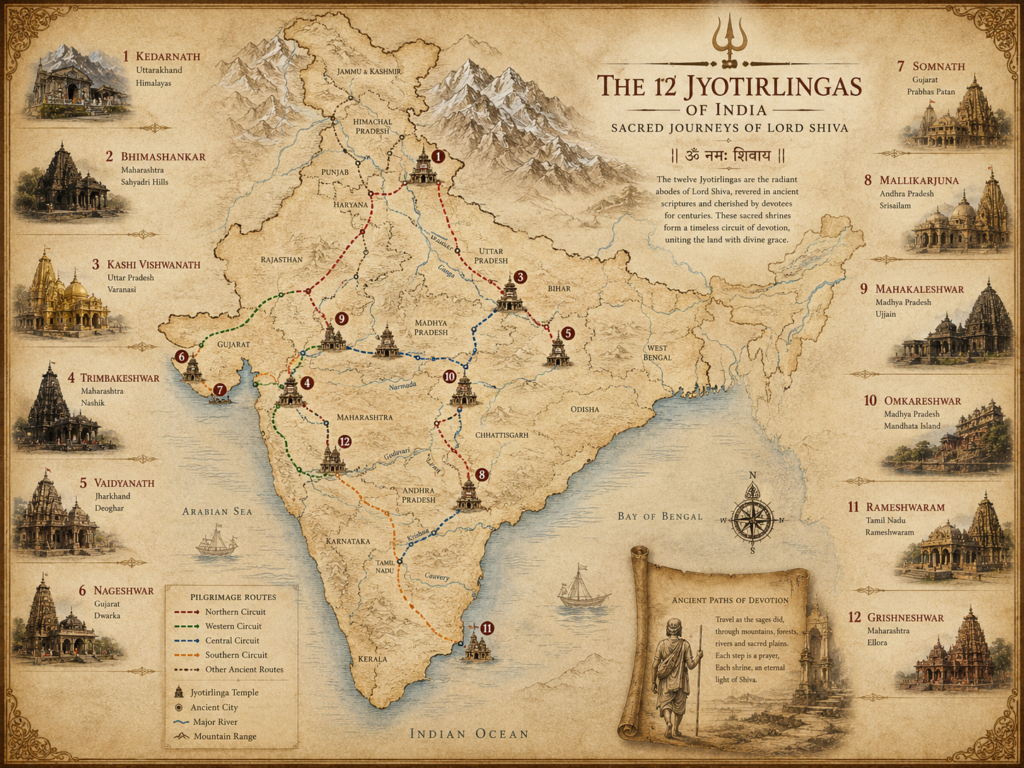
This distribution reflects an important idea deeply embedded in Indian civilization: sacred geography.
In many Indian traditions, geography was never viewed as merely physical territory. Rivers, mountains, forests, and pilgrimage routes were integrated into cultural memory and spiritual identity. Sacred sites created networks that connected distant linguistic and political regions through shared ritual movement.
The Jyotirlingas played an important role in this process.
A pilgrim traveling between these temples historically encountered:
- different languages,
- architectural styles,
- food traditions,
- local legends,
- and ritual practices.
In effect, pilgrimage routes became cultural corridors.
Some historians compare this phenomenon to the role played by monastic routes in medieval Europe or Buddhist pilgrimage circuits across Asia. In India, however, the temple network was uniquely decentralized, with regional traditions contributing to a broader sacred landscape rather than a single centralized authority.
This sacred geography also helped preserve continuity during periods of political instability.
The Somnath temple, for example, became a powerful symbol of reconstruction after repeated destruction and rebuilding across centuries. Kedarnath, located in the Himalayan region, preserved pilgrimage traditions despite harsh terrain and seasonal isolation. Rameswaram connected Shaivite worship with Ramayana traditions in southern India.
Each temple became part of a larger cultural map rather than existing as an isolated shrine.
The Symbolism Behind the Jyotirlingas
Modern discussions about ancient temples often become trapped between two extremes:
- blind belief,
- or dismissive skepticism.
The symbolism of the Jyotirlingas offers a more thoughtful middle path.
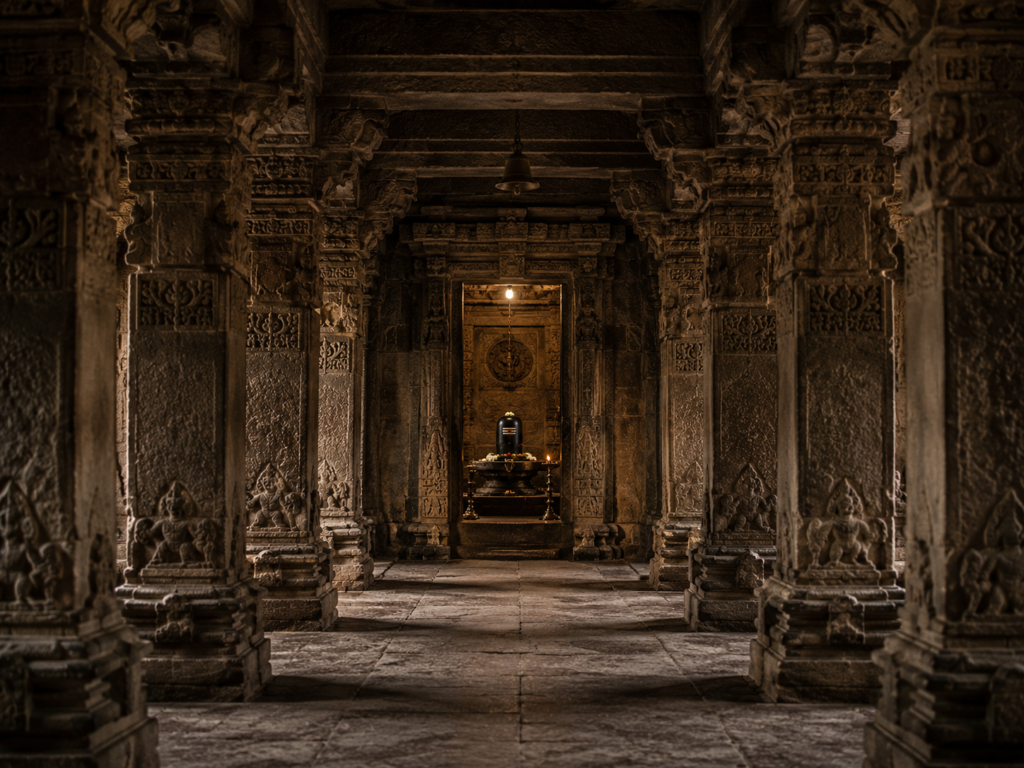
The Shiva Linga has historically been interpreted in multiple philosophical ways:
- as a symbol of cosmic creation,
- as a representation of the formless divine,
- or as a marker of infinite consciousness.
Unlike deity forms centered on human-like imagery, the Linga’s abstract structure allows interpretation beyond physical representation.
This philosophical abstraction distinguishes Shaivite symbolism from many ancient Mediterranean traditions, where divine figures were often represented primarily through human form. In Indian metaphysical traditions, the divine could also be expressed through symbols intended to transcend ordinary imagery.
The recurring association with light deepens this symbolism further.
In Upanishadic and philosophical traditions, light often signifies awareness emerging from ignorance. The Jyotirlinga, interpreted symbolically, can therefore be understood as a representation of inner illumination rather than supernatural spectacle.
This distinction matters in contemporary discussions.
Treating sacred symbols only as miracle objects reduces their philosophical richness. Understanding their symbolic dimension reveals why these traditions survived for centuries within literature, ritual, architecture, and collective memory.
Temple Architecture, Patronage, and Cultural Life
The Jyotirlinga temples are not historically important only because of religion. They also reveal the role temples once played in Indian public life.
In medieval India, major temples frequently functioned as:
- educational institutions,
- artistic centers,
- pilgrimage hubs,
- economic networks,
- and repositories of cultural memory.

Several temple complexes supported:
- sculptors,
- metalworkers,
- musicians,
- Sanskrit scholars,
- dancers,
- and manuscript traditions.
Architectural styles across the Jyotirlingas also reflect India’s regional diversity.
For example:
- Somnath reflects western Indian temple traditions,
- Kedarnath shows Himalayan stone architecture adapted to mountain conditions,
- Rameswaram is known for its massive Dravidian corridors and temple engineering,
- while Mahakaleshwar in Ujjain developed within one of ancient India’s major urban and astronomical centers.
Ujjain itself historically held importance in astronomy and mathematics, serving as a reference point for traditional Indian geographical calculations in several historical periods.
These details remind us that temple culture cannot be reduced to ritual alone. Temple institutions shaped art, economics, education, and regional identity across centuries.
Adi Shankaracharya and Pilgrimage Traditions
The expansion and preservation of sacred pilgrimage traditions in India are also associated with the philosopher Adi Shankaracharya, who lived during the early medieval period.
Although historians continue to debate aspects of his chronology, Shankaracharya is widely remembered for helping revive and organize several pilgrimage traditions across the subcontinent.
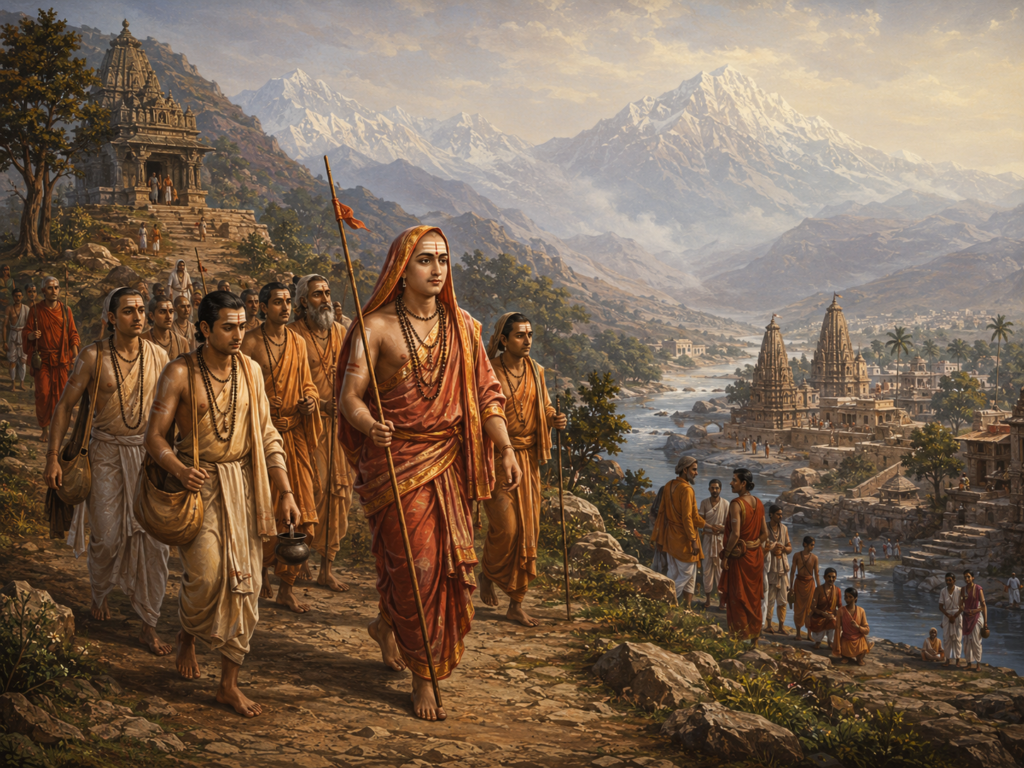
His influence is especially associated with:
- monastic institutions,
- philosophical consolidation,
- and the idea of linking sacred centers across different regions.
This broader civilizational framework helped reinforce pilgrimage as both spiritual practice and cultural integration.
The Jyotirlinga network existed within this larger landscape of sacred movement that connected people across geography, language, and regional identity.
Why the Jyotirlingas Still Matter Today
In the modern world, ancient pilgrimage traditions are often viewed only through the lens of religion. Yet the continued relevance of the Jyotirlingas extends beyond devotional practice alone.
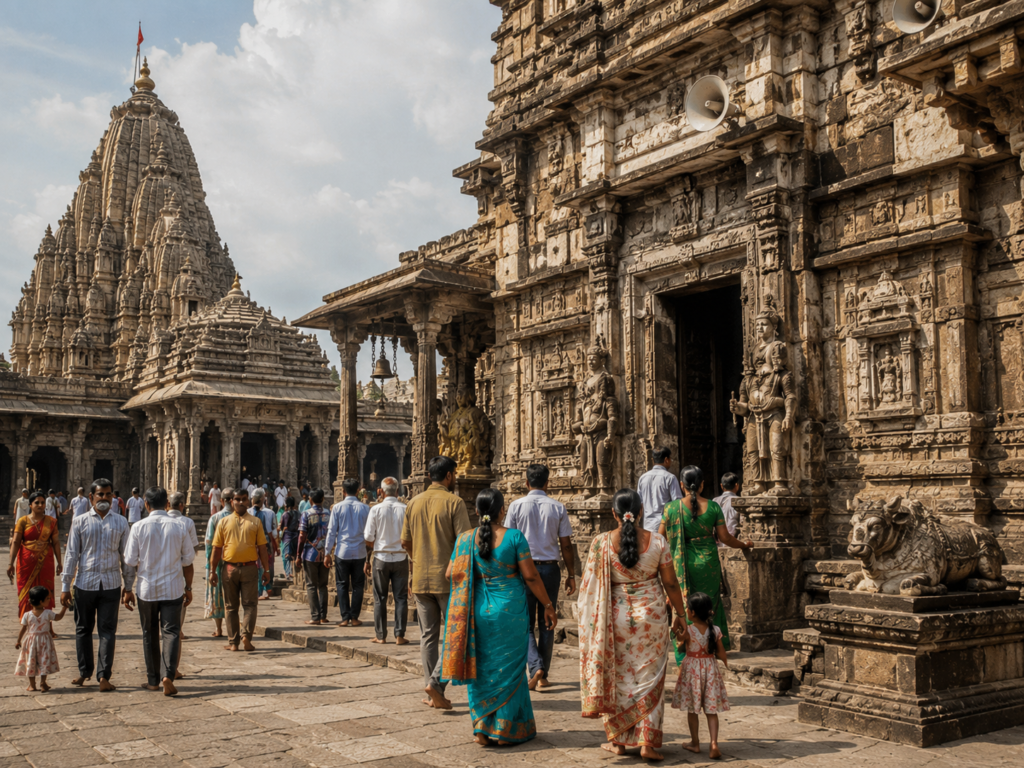
These temples remain important because they preserve:
- architectural heritage,
- regional traditions,
- oral storytelling,
- classical rituals,
- and historical continuity.
For many visitors, traveling to these temples is also an encounter with cultural memory and ancestral identity.
At the same time, the growing popularity of pilgrimage tourism raises modern concerns:
- How should fragile heritage sites be preserved?
- How can ecological damage around sacred regions be reduced?
- What balance should exist between tourism infrastructure and historical conservation?
Kedarnath, for example, gained renewed attention after the devastating floods of 2013, which raised broader discussions about environmental vulnerability in Himalayan pilgrimage regions.
These conversations demonstrate that sacred geography remains deeply connected to contemporary social and environmental realities.
The Jyotirlingas therefore matter today not because they promise supernatural outcomes, but because they continue to influence how communities understand heritage, continuity, and belonging.
Interpreting Sacred Traditions Responsibly
Responsible cultural writing requires intellectual balance.
Sacred traditions deserve respect, but respect does not require promoting unverifiable supernatural claims as objective fact. Similarly, historical analysis does not require dismissing the emotional or philosophical importance of faith.
Much of the internet’s mythology content fails because it relies on:
- sensationalism,
- fear,
- miracle marketing,
- or exaggerated claims of hidden powers.

Such approaches reduce complex traditions into click-driven spectacle.
A more meaningful question is not:
“Which Jyotirlinga is the most powerful?”
but rather:
“What do these temples reveal about India’s philosophical imagination, sacred geography, and cultural continuity?”
This shift transforms mythology from superstition into cultural literacy.
Conclusion
The mystery of the Jyotirlingas is not ultimately about paranormal legends or hidden supernatural powers. Their enduring significance lies in something far deeper.
For centuries, these temples have connected regions, preserved artistic traditions, supported pilgrimage networks, inspired architecture, and shaped philosophical reflection within Indian civilization.
They represent the intersection of:
- geography,
- memory,
- symbolism,
- spirituality,
- and cultural continuity.
To study the Jyotirlingas thoughtfully is therefore to study how civilizations preserve meaning across generations.
In an age dominated by rapid information and digital distraction, these ancient sacred networks continue to remind people of something enduring: that cultural identity is often carried not only through texts and politics, but also through journeys, landscapes, symbols, and shared memory.
Reader Takeaway
The Jyotirlingas can be understood on multiple levels:
- as sacred pilgrimage destinations,
- as historical institutions,
- as masterpieces of regional architecture,
- and as philosophical symbols within Indian thought.
Approaching them through this broader lens allows mythology to become more than storytelling. It becomes a doorway into understanding how culture, symbolism, history, and human meaning evolve together across centuries.